Finds / Roman
Britain was part of the Roman empire from the invasion of 43 AD until the withdrawal of the legions in the early fifth century. Southern England was among the most heavily settled parts of the province, with a dense network of villas, farmsteads, roadside settlements and small towns spread across the chalk downland and river valleys that Midweek Searchers walk today.
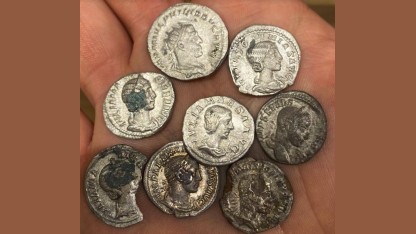
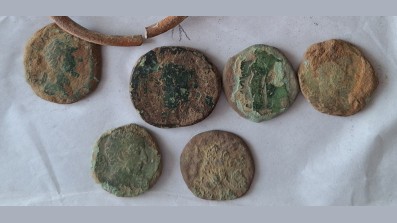
Roman coinage circulated in enormous quantities and was frequently lost in the fields around settlements, so a single productive permission can produce coins spanning generations of emperors. Because much of it is copper alloy that has lain in ploughsoil for well over a millennium, condition varies widely and identification often depends on the reverse design rather than a legible legend.
Every Roman find our members record goes to the Portable Antiquities Scheme, where the findspot is logged to a four-figure grid reference. Coin scatters are one of the most useful things a detectorist can report: mapped over time they help archaeologists identify settlement sites that appear nowhere in the written record.
What turns up from the Roman period
- Copper alloy and silver coinage, from early denarii through to late fourth-century bronzes
- Brooches, including bow, plate and penannular types
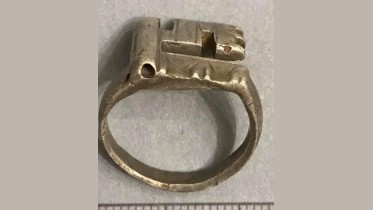
- Personal items such as finger rings, hairpins, tweezers and cosmetic sets
- Fittings from harness, boxes and furniture
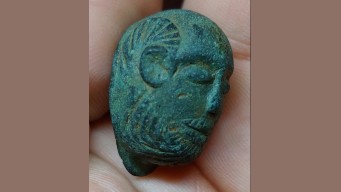
Every find below was recorded by a Midweek Searchers member and, where a reference has been assigned, reported through the Portable Antiquities Scheme. Exact findspots are withheld out of respect for our landowners.